
Architecture Visual Aids
These existing diagrams answer different parts of the system story. Read them one at a time rather than treating the architecture catalogue as one large diagram.
1. Who decides and who executes
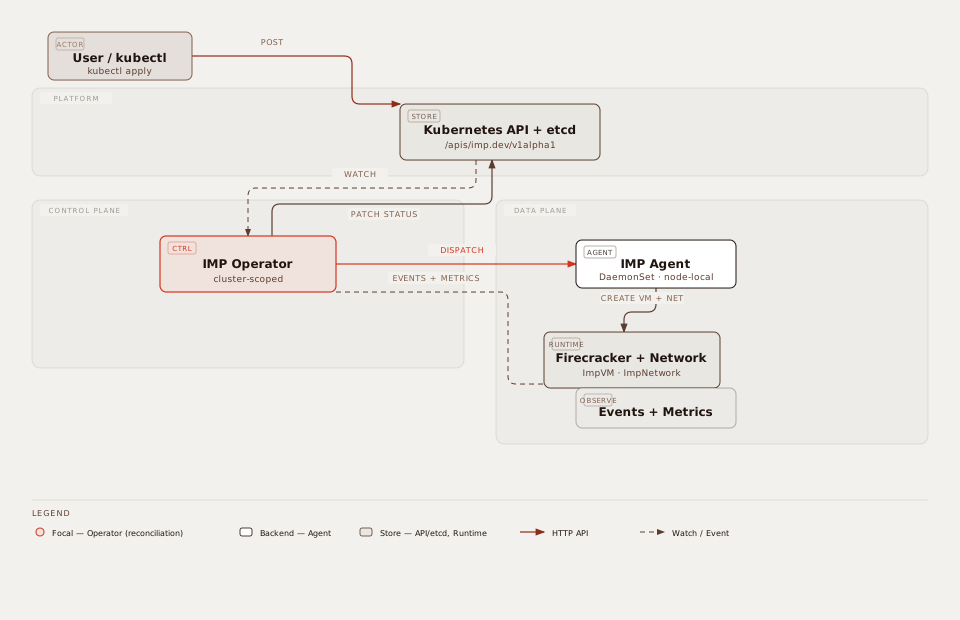
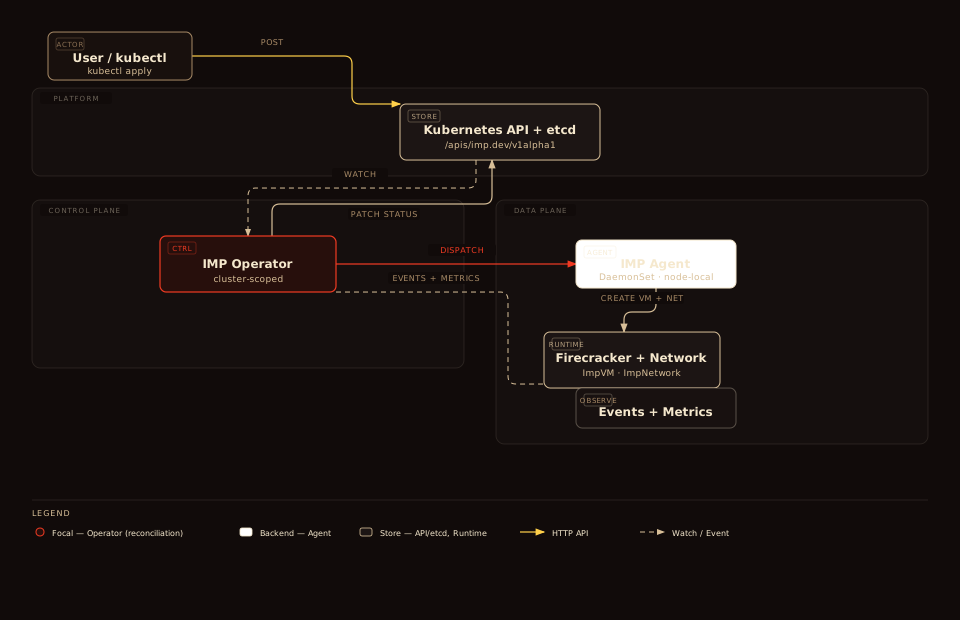
This is the starting point. The operator decides what should exist. The node agent performs the work that must happen on the selected node. Kubernetes holds the desired state. Firecracker and VM networking are node-local operations.
2. What the system contains
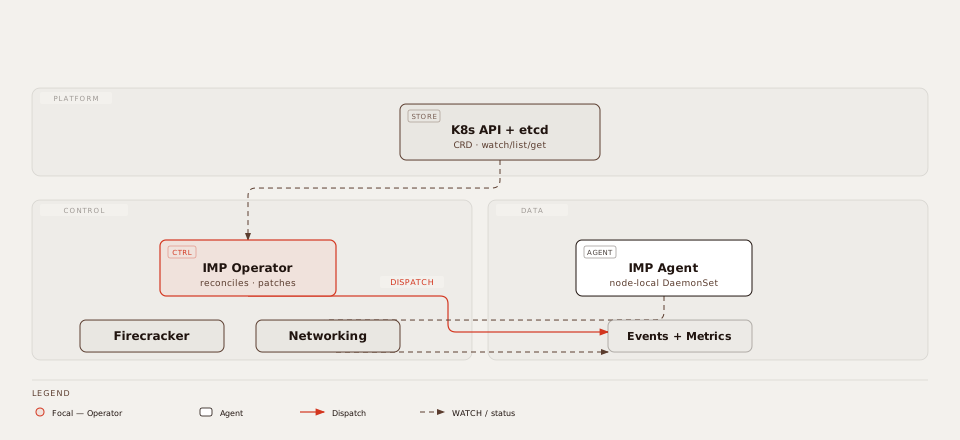
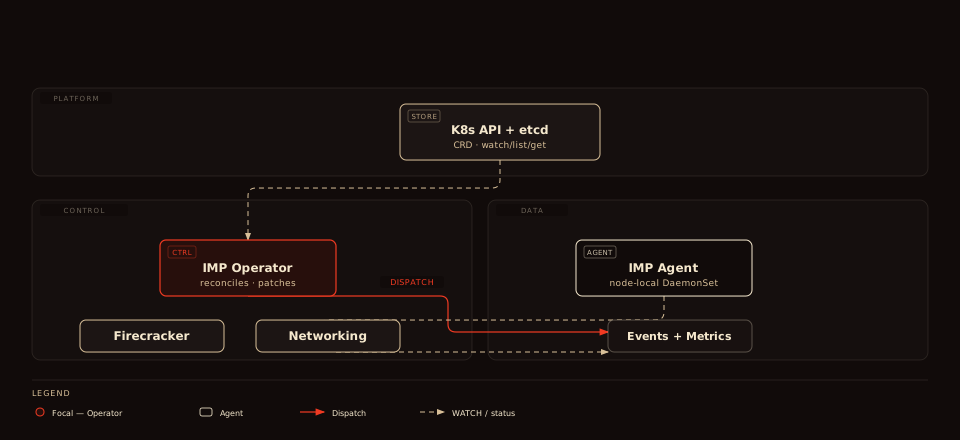
This view makes the boundary concrete. Cluster reconciliation and host runtime work have separate owners. It is a design view, not proof that a runner pool has completed a live job.
3. What a normal VM lifecycle looks like
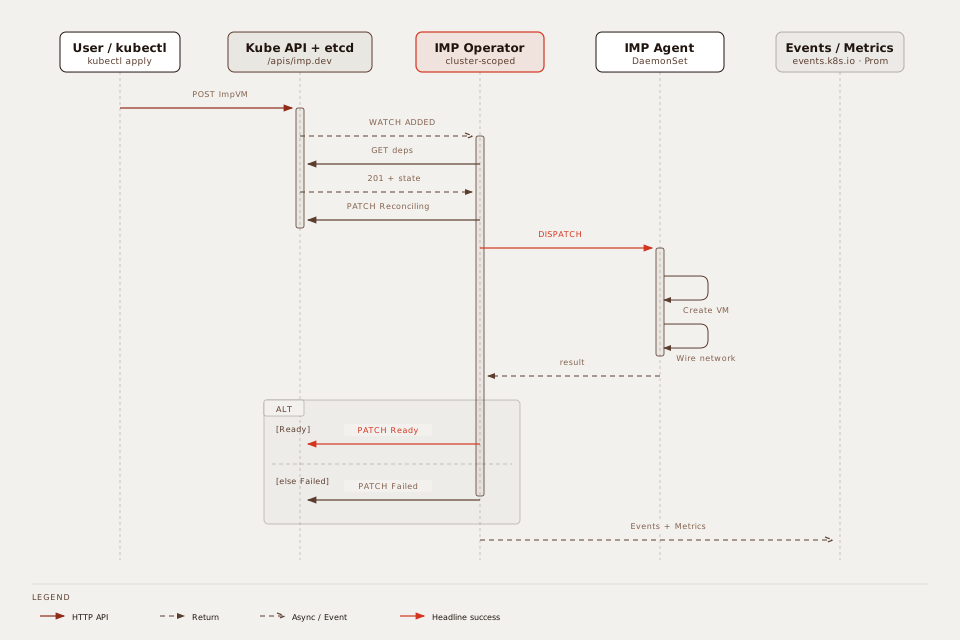
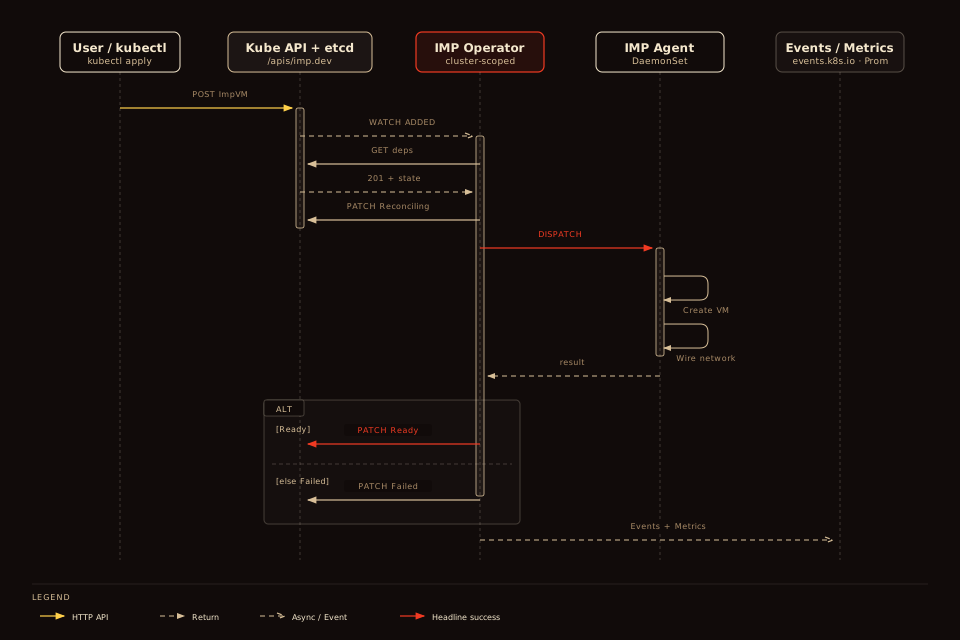
This view shows the normal lifecycle and its failure branch. A successful API request is not the end. The important question is where a failure becomes visible and who owns recovery. Then return to Under the Hood for the runner-specific GitHub App and VSOCK handoff.
Read the diagrams in this order
- Start with the split-control overview.
- Use the container view to explain the design boundary.
- Read the runner handoff diagram in Under the Hood.
- Use the end-to-end sequence for lifecycle and failure questions.
- End at Demonstration Evidence: what still needs live proof.
These are existing repository diagrams selected for the talk. No new architecture behaviour is asserted on this page.